Task Manager Mobile App: Designing for Modern Productivity
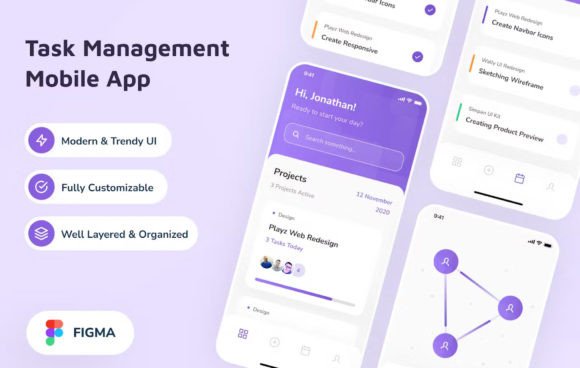
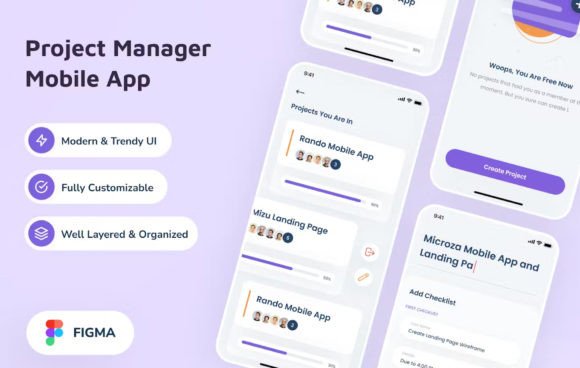
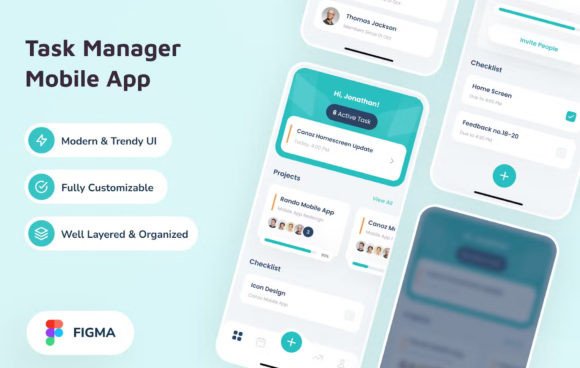
In an era where attention is the scarcest resource, the tools we use to organize our thoughts and actions must be as efficient as the minds they serve. The Task Manager Mobile App has evolved from a simple digital checklist into a sophisticated command center for personal and professional life. For designers, developers, and product managers, creating an interface that balances functionality with aesthetic appeal is no longer optional; it is the baseline expectation. This shift is particularly evident when examining high-fidelity design assets, such as a Task Manager mobile app UI UX design with iPhone X Screen Size ready to kickstart your design process. These resources do more than provide a visual template; they encapsulate the current philosophy of mobile productivity software.
The Evolution of Digital Organization
Twenty years ago, task management was often relegated to physical planners or basic desktop applications. Today, the smartphone is the primary device for capturing ideas, scheduling meetings, and tracking progress. This transition has fundamentally changed how users interact with their to-do lists. The modern user expects immediate access, intuitive gestures, and a visual experience that reduces cognitive load rather than adding to it.
The relevance of a well-designed Task Manager Mobile App lies in its ability to adapt to these changing habits. Professionals, freelancers, and entrepreneurs alike are juggling multiple streams of information simultaneously. A clunky interface can disrupt a workflow, causing friction that leads to abandonment. Conversely, a seamless experience encourages consistent usage, turning the app into a reliable habit. The market has responded by prioritizing clean, trendy, and modern UI designs that strip away unnecessary complexity while retaining powerful features.
Why iPhone X Screen Size Matters in Design
When discussing mobile design standards, the iPhone X screen size serves as a critical benchmark. Introduced with a notch and edge-to-edge display, it forced a rethinking of layout hierarchies and navigation patterns. A Task Manager mobile app UI UX design with iPhone X Screen Size ensures that the application looks native on contemporary devices. It accounts for safe areas, dynamic type scaling, and the full utilization of available screen real estate without compromising usability.
Designers who leverage this specific screen dimension understand that every pixel counts. The removal of the traditional home bar required new navigation paradigms, often leading to bottom sheet menus and gesture-based interactions. By starting with a design optimized for this form factor, creators ensure their product feels familiar and comfortable to the vast majority of iOS users. This attention to detail signals professionalism and respect for the user's device capabilities.
Core Features of Modern Task Management Interfaces
A successful Task Manager Mobile App is defined not just by what it does, but by how it presents those functions. The current trend leans heavily towards minimalism and clarity. Users are overwhelmed by data; therefore, the interface must act as a filter, highlighting what is important right now. Key features in top-tier designs include:
- Clean, Trendy, Modern UI Design: This involves generous whitespace, subtle shadows for depth, and a limited color palette that guides the eye. Cluttered screens lead to decision fatigue. A modern aesthetic suggests that the tool itself is up-to-date and capable of handling complex workflows.
- Well-organized layers: In the context of design files, this refers to the structural integrity of the project. For the end-user, it translates to logical information architecture. Tasks should be grouped intuitively—by date, project, or priority—allowing users to drill down into details only when necessary.
- Accessibility through Free fonts used: Typography plays a massive role in readability. Utilizing free, open-source fonts ensures that the app remains accessible across different platforms and devices without licensing hurdles. It also allows for faster loading times and consistent rendering.
These elements work together to create an environment where productivity thrives. When a user opens the app, they should immediately understand where to add a task, where to find completed items, and how to reschedule deadlines. The learning curve should be negligible.
The Role of Figma in Accelerating Development
For teams looking to build these applications, the availability of a robust Figma Source File is a game-changer. Figma has become the industry standard for collaborative interface design, allowing multiple stakeholders to view, comment on, and iterate on designs in real-time. Having a pre-built file means that the foundational work of grid systems, component libraries, and style guides is already complete.
This accelerates the design-to-development handoff significantly. Developers can inspect the well-organized layers directly within the file, extracting exact measurements, colors, and font properties. This precision reduces errors and ensures that the final product matches the designer's vision. Furthermore, the inclusion of Font Link Documentation ensures that typography remains consistent throughout the project, preventing the common issue of mismatched text styles between screens.
Adapting to Changing Workflows and User Expectations
The way people work has shifted dramatically in recent years. Remote work, asynchronous communication, and the gig economy have created a need for flexible task management solutions. A rigid, one-size-fits-all approach no longer suffices. Users want apps that can adapt to their unique rhythms. Some prefer a strict daily schedule, while others thrive on Kanban boards or simple list views.
A Task Manager Mobile App designed with these nuances in mind offers customization without complexity. The "Clean, Trendy, Modern UI Design" mentioned in contemporary asset packs often includes modular components that can be rearranged or hidden based on user preference. This flexibility is crucial for retention. If a user cannot mold the tool to fit their brain, they will eventually return to a notebook or a sticky note.
Moreover, the integration of lifestyle shifts into app design is becoming more apparent. We see features that encourage breaks, track time spent on tasks, or integrate with wellness apps. The goal is holistic productivity, not just output maximization. Designers must consider the emotional state of the user. A calming color scheme and smooth animations can reduce anxiety associated with overwhelming to-do lists, making the app a positive part of the user's day rather than a source of stress.
Practical Implications for Businesses and Creators
For business owners and marketers, the choice of task management tools impacts team efficiency. Adopting an app with a superior UI/UX can lead to better adoption rates among employees. If the tool is frustrating to use, compliance drops, and visibility into projects diminishes. Investing in high-quality design assets, such as a comprehensive Task Manager mobile app UI UX design with iPhone X Screen Size, is an investment in organizational culture.
Freelancers and creators also benefit immensely. Their livelihood depends on managing diverse projects simultaneously. A well-structured app helps them switch contexts quickly, ensuring that nothing falls through the cracks. The documentation provided with professional design kits, including Font Link Documentation, empowers solo developers to maintain brand consistency even if they outsource parts of the development process.
Building Trust Through Quality Design
In the crowded marketplace of productivity apps, trust is earned through reliability and quality. A polished interface signals that the underlying code is likely stable and secure. Users subconsciously associate good design with good engineering. When a Task Manager Mobile App looks professional, users feel confident entrusting it with their most critical deadlines and sensitive project details.
This perception is vital for startups and established companies alike. Launching with a prototype that lacks visual fidelity can damage a brand before it gains traction. By utilizing resources that offer Free fonts used and Well-organized layers, teams can present a high-quality Minimum Viable Product (MVP) that resonates with early adopters. It demonstrates a commitment to excellence from day one.
Furthermore, the iterative nature of modern design allows for continuous improvement. With a solid foundation like a Figma Source File, teams can easily test new features, gather user feedback, and refine the interface. This agility is essential in a fast-moving tech landscape where user expectations evolve rapidly.
Looking Ahead: The Future of Task Management
As we look toward the future, the line between task management and artificial intelligence will continue to blur. However, the core principles of good UI/UX will remain constant. No matter how advanced the algorithms become, the interface must remain human-centric. The trends seen today—clean lines, organized structures, and thoughtful typography—are the building blocks of tomorrow's intelligent assistants.
Designers and developers who master these fundamentals will be best positioned to innovate. Whether you are building a niche app for educators or a comprehensive suite for enterprise clients, starting with a strong visual framework is key. The availability of ready-to-use assets, such as the Task Manager mobile app UI UX design with iPhone X Screen Size ready to kickstart your design process, lowers the barrier to entry, allowing creators to focus on solving real problems rather than reinventing the wheel.
Ultimately, the goal is to create tools that empower people. A great Task Manager Mobile App does not just list tasks; it clarifies priorities, reduces mental clutter, and helps users achieve their goals. By embracing modern design standards and leveraging high-quality resources, we can build products that truly enhance the way we live and work.