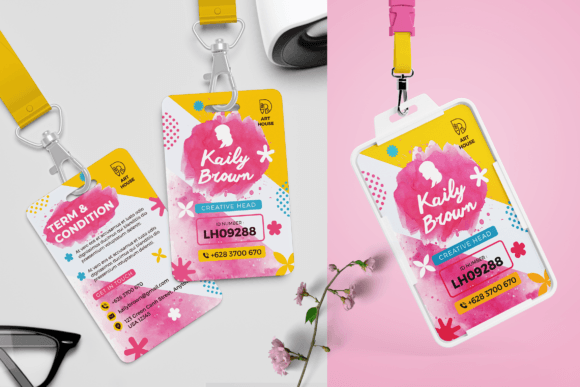
Professional ID Card Template for Every Business
An ID Card is far more than a simple piece of plastic or paper; it is a tangible extension of your brand identity and a critical tool for security, access, and recognition. Whether you are a freelance photographer managing client access at an event, a retail manager organizing staff uniforms, or a creative agency presenting a polished image to partners, the quality of your identification matters. A well-designed card signals professionalism, builds trust, and ensures that your team is easily identifiable in any environment. This guide explores how a versatile, high-quality template can serve diverse industries while maintaining the technical standards required for professional printing.
The Power of a Universal Design Foundation
The challenge for many businesses is finding a design solution that is both flexible enough to adapt to various roles and specific enough to look intentional. A generic template often feels cheap, while a highly custom design can be expensive and time-consuming to replicate for every new hire. The ideal solution lies in a robust ID Card template built on a solid foundation. This approach allows you to maintain consistency across your organization while swapping out names, titles, and photos effortlessly.
For creative professionals like artists and designers, the card itself becomes a portfolio piece. It needs to reflect aesthetic sensibilities without sacrificing legibility. For corporate entities, the focus shifts to clarity, hierarchy, and strict adherence to brand guidelines. A truly suitable template bridges these gaps by offering a neutral yet sophisticated structure that can be dressed up with bold colors for a magazine startup or toned down with monochrome elegance for a law firm. The goal is to create a visual language that speaks clearly to your audience, whether they are walking into your office or scanning a badge at a conference.
Technical Excellence: Why Specifications Matter
Creativity must always be grounded in technical reality. An ID Card that looks stunning on a screen but fails during production is a wasted investment. Professional templates are engineered with precise specifications to ensure print-ready results. Understanding these metrics is essential for anyone looking to produce high-quality identification.
- Dimensions: The standard size of 55x85 mm aligns perfectly with global ISO/IEC 7810 ID-1 specifications. This ensures compatibility with standard card readers, wallet slots, and lanyards worldwide.
- Bleed Area: Including a 3 mm bleed is non-negotiable for professional printing. This extra margin prevents unwanted white edges if the cutting machine shifts slightly during production, ensuring your design extends seamlessly to the very edge of the card.
- Color Mode: Working in CMYK (Cyan, Magenta, Yellow, Key/Black) rather than RGB is crucial. Screens display light, but printers use ink. Converting from RGB to CMYK after design can result in dull, muddy colors. Starting in CMYK guarantees that the vibrant hues you see on your monitor match the final printed product.
- Resolution: A resolution of 300 dpi (dots per inch) is the industry standard for print. Lower resolutions result in pixelation and blurriness, which immediately undermines the perceived value of your business.
By adhering to these technical constraints, you ensure that the final output is crisp, durable, and ready for mass production or single-run customization.
Tailoring the Template for Diverse Industries
The true strength of a customizable PSD file lies in its adaptability. Different sectors have unique needs, and a one-size-fits-all approach rarely works. Here is how various professionals can leverage a flexible template to meet their specific goals.
Creative Agencies and Freelancers
For photographers, artists, and designers, the ID Card is a mini-business card. Use this space to showcase your unique style. You might choose a layout that features a large, high-resolution portrait on one side and your logo with social media handles on the back. Since the text and color are fully customizable, you can experiment with gradients, overlays, or distinctive typography that reflects your personal brand. The included font links make it easy to implement unique typefaces that set you apart from the competition.
Retail and Hospitality
In fast-paced environments like retail stores or hotels, functionality is paramount. Staff members need to be identified quickly by customers. A clean, high-contrast design with large, legible text for names and job titles is essential. Corporate branding should be present but not overwhelming. Using the template's color customization features, you can assign different color bands to different departments—perhaps blue for sales, green for management, and red for security—creating an intuitive visual system for your floor staff.
Media, Blogs, and Magazines
Journalists and content creators often require press credentials. These cards need to convey authority and legitimacy. A professional layout with ample space for a photo, name, publication logo, and perhaps a QR code linking to a digital portfolio or verification page is ideal. The structured layers of a Photoshop PSD file allow you to keep the "Press" designation prominent while ensuring all contact information is clear and accessible.
Corporate and Educational Institutions
Large organizations and schools prioritize uniformity and security. The template serves as a master blueprint where individual employee data can be merged efficiently. Consistency in font usage, logo placement, and background patterns reinforces organizational culture. For educational settings, you might add student IDs or faculty distinctions using the customizable text fields, ensuring a cohesive look across the entire campus community.
Design Principles for Effective Identification
When adapting a template, it is easy to get carried away with decorative elements. However, the primary function of an ID Card remains identification. To keep your results effective and organized, follow these practical design principles.
Hierarchy is Key. The most important information—usually the person's name and photo—should be the focal point. Secondary details like job titles, department names, or expiration dates should be visible but subordinate. Do not clutter the design with too much text. If a detail isn't essential, leave it off. White space is your friend; it helps the eye navigate the card quickly.
Legibility Over Trendiness. While current design trends are exciting, readability never goes out of style. Ensure there is sufficient contrast between your text and the background. Avoid placing white text over a busy pattern or a low-contrast area. The font link provided in the download folder offers options that balance style with clarity, but always test your choices at actual size before finalizing.
Brand Consistency. Your ID Card should feel like it belongs to your company. Use your official brand colors and logos consistently. If your website uses a specific shade of blue, your ID Card should match it exactly. This consistency builds recognition and trust. When using the customizable color features, input your exact CMYK values to avoid discrepancies.
Maximizing Your Workflow with PSD Files
Using an Adobe Photoshop PSD file offers significant advantages over static formats. The layered structure allows you to edit specific elements without affecting the rest of the design. You can change a photo, update a name, or swap a logo in seconds. This efficiency is invaluable when you need to issue cards for a large team or update designs seasonally.
The inclusion of font links within the download folder removes a common frustration in graphic design: missing fonts. Often, a beautiful template relies on a typeface you don't own, breaking the workflow. By providing direct access to the necessary fonts, the template ensures a seamless experience from download to final export. Simply install the fonts, open the PSD, and begin customizing.
Whether you are a solo entrepreneur creating your first badge or a marketing director overseeing a rollout for hundreds of employees, the right tools make all the difference. A high-resolution, print-ready template eliminates the guesswork of dimensions and color modes, allowing you to focus on what truly matters: representing your business with pride and precision.
Ultimately, an ID Card is a small object with a big impact. It opens doors, grants access, and introduces people to your world. By choosing a template that balances technical rigor with creative flexibility, you ensure that every card you issue reflects the highest standards of your profession. Take advantage of the customizable features to craft a design that is not only functional but also a genuine reflection of your unique identity.