Business Brochure Template Design: The Modern Standard for Professional Branding
In an era where digital noise often drowns out meaningful communication, the tangible impact of a well-crafted physical document remains surprisingly potent. A Business Brochure Template Design is no longer just a placeholder for text and images; it is a strategic asset that defines how a company presents its narrative to the world. For entrepreneurs, marketing directors, and creative professionals alike, the ability to rapidly deploy high-quality visual materials without sacrificing design integrity is essential. This is where the concept of a fully editable, modern company profile becomes critical. It bridges the gap between professional graphic design standards and the practical needs of businesses that must move quickly.
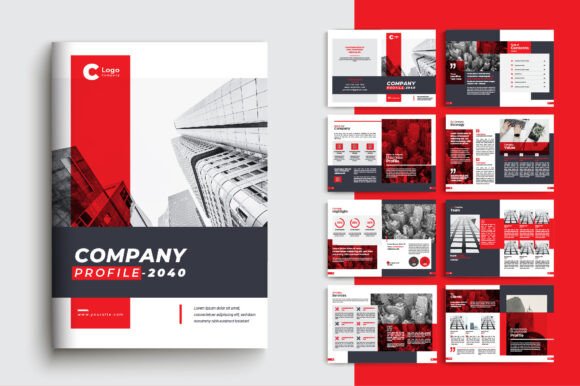
The evolution of corporate communication has shifted from static, one-size-fits-all handouts to dynamic, modular storytelling tools. Today's market expects consistency, clarity, and aesthetic sophistication. Whether you are launching a startup, rebranding an established firm, or pitching a new service line, your visual collateral speaks before you do. A 16-page A4 template offers the perfect balance of depth and brevity, allowing enough space to detail services, showcase portfolios, and build trust, while remaining concise enough to hold a reader's attention.
The Strategic Value of a Structured Company Profile
Why does a structured approach matter? In the current business landscape, time is the most scarce resource. Custom designing a brochure from scratch requires hours of layout work, font pairing, grid alignment, and bleed adjustments. For many small business owners and freelancers, this overhead can be prohibitive. A pre-designed Company profile with 16 pages A4 template design solves this by providing a robust framework. It allows the user to focus entirely on content—crafting compelling copy and selecting impactful imagery—rather than wrestling with technical layout constraints.
This shift reflects a broader trend in creative workflows: the democratization of professional design. Businesses no longer need to hire expensive agencies for every single piece of collateral. Instead, they can leverage high-quality templates that adhere to print standards. When a template is fully editable, it empowers users to maintain brand consistency across all touchpoints. You can easily replace your images and fonts to match your specific color palette and tone, ensuring that the final output feels bespoke rather than generic.
Adapting to Modern Visual Expectations
Modern audiences have developed a refined eye for design. They can instantly distinguish between a professionally laid-out document and an amateur attempt. This heightened expectation drives the demand for templates that feature clean lines, balanced whitespace, and thoughtful typography. The "modern" aspect of these templates is not merely a stylistic choice; it is a functional necessity. Cluttered designs confuse readers, while streamlined layouts guide them through the information hierarchy naturally.
Furthermore, the flexibility to customize shapes and elements means that a single template can serve multiple purposes within a single organization. One version might highlight case studies for a B2B pitch, while another emphasizes team culture for recruitment efforts. Because all objects and text are fully editable, the same core structure can be adapted to various campaigns without losing its professional edge. This adaptability is crucial for agile businesses that need to pivot their messaging frequently.
Technical Precision: Why Print Standards Matter
While digital presentations dominate daily interactions, the printed brochure retains a unique authority. It conveys permanence and commitment. However, creating print-ready files requires adherence to strict technical specifications that non-designers often overlook. This is where the value of a professional-grade template becomes evident. Features like a 0.25-inch bleed and 300 Dpi resolution are not arbitrary numbers; they are the industry standards required to prevent white edges and pixelation during the printing process.
A common pitfall for DIY creators is submitting files in RGB color mode instead of CMYK. When an RGB file goes to print, colors often shift, appearing duller or different than expected on screen. A proper Business Brochure Template Design comes pre-configured in CMYK color mode, ensuring that the colors you see on your monitor translate accurately to the paper. This technical foresight saves money on reprints and prevents the embarrassment of delivering subpar materials to potential clients.
The inclusion of an A4 artboard size ensures compatibility with global printing standards. A4 is the universal format for business documents outside of North America and is widely accepted even in US markets for international correspondence. By starting with the correct dimensions, users avoid the tedious task of resizing elements, which can distort images and break layouts. The precision of the template acts as a safety net, guaranteeing that the final product meets the rigorous demands of commercial printers.
File Formats and Workflow Efficiency
Efficiency in the creative process is about having the right tools at the right stage. The availability of both JPEG and Eps versions caters to different phases of the workflow. The JPEG files serve as excellent proofs for quick reviews, client approvals, or digital previews, allowing stakeholders to visualize the layout without needing specialized software. Meanwhile, the Illustrator EPS file (compatible with CS6 and CC) provides the full vector power needed for final editing.
Compatibility with older versions like CS6 alongside newer Creative Cloud releases ensures longevity. Not every business can afford the latest subscription immediately, yet they still require access to professional assets. By supporting a wide range of software versions, the template removes barriers to entry. Users can open the file, make their changes, and export with confidence, knowing the layers, masks, and links will remain intact.
It is also important to note that while the template includes all structural elements, images are not included. This is a deliberate design choice that respects copyright laws and encourages authenticity. Using stock photos that don't reflect your actual business can create a disconnect with your audience. By leaving the image slots open, the template invites you to insert your own high-resolution photography, ensuring that the visuals tell your true story. Similarly, the use of free fonts eliminates licensing hurdles, allowing you to distribute your brochures without worrying about legal restrictions on typefaces.
Customization as a Competitive Advantage
The true power of a fully editable template lies in its ability to be transformed. While the skeleton is provided, the flesh and blood of the design come from your brand identity. Every shape, line, and text box can be adjusted. Perhaps your logo requires more breathing room, or your brand guidelines dictate a specific paragraph spacing. With these templates, those adjustments are simple clicks away.
This level of control is vital for maintaining brand equity. Consistency builds recognition, and recognition builds trust. When a client receives a brochure that perfectly aligns with your website, social media, and business cards, it reinforces the professionalism of your entire operation. Conversely, inconsistent branding can signal disorganization. By using a customizable template, you ensure that every piece of your marketing puzzle fits together seamlessly.
Consider the scenario of a freelancer who needs to update their portfolio quarterly. Without a template, each update would require a significant time investment. With a flexible system, updating the 16-page profile becomes a routine task. You simply swap out old project images for new ones, update the contact details, and perhaps tweak a headline. The underlying design remains strong and consistent, but the content stays fresh and relevant.
Real-World Applications Across Industries
The versatility of a 16-page A4 company profile extends across diverse sectors. For architects and interior designers, the template provides ample space for large, high-quality renderings and floor plans. For consultants and financial advisors, the structured layout supports data-heavy sections, charts, and detailed service descriptions without looking cluttered. Even for creative agencies, the modern aesthetic serves as a canvas to showcase their own design sensibilities.
For educators and non-profits, the ability to clearly communicate mission statements and success stories is paramount. The clear hierarchy of headings and body text in these templates ensures that complex information is digestible. The 300 Dpi quality ensures that even fine details in infographics or photographs remain crisp, enhancing the credibility of the information presented.
Ultimately, investing in a high-quality Business Brochure Template Design is an investment in your brand's perception. It signals to the market that you value quality, attention to detail, and professional presentation. As the line between digital and physical continues to blur, the ability to produce premium print materials efficiently will remain a key differentiator. By leveraging tools that combine technical precision with creative flexibility, businesses can tell their stories with clarity and impact, standing out in a crowded marketplace.
The future of business communication is hybrid, requiring agility in both digital and physical realms. A well-chosen template equips you with the foundation to navigate this landscape effectively. It removes the friction of design, allowing you to focus on what truly matters: connecting with your audience and driving growth through compelling, professional storytelling.